Beyond Indicator Lag: The Power of Pure Price Action
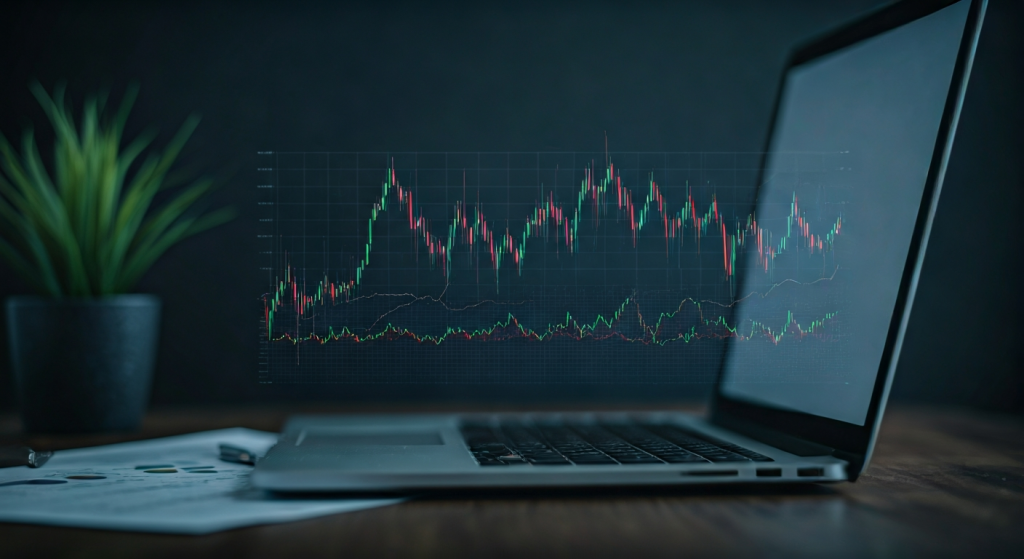
Many traders begin their journey by seeking the perfect indicator—a magic bullet that signals entries and exits with infallible accuracy. However, this pursuit often overlooks a fundamental truth: indicators are derived from price. They are, by their very nature, lagging. The first profound secret lies in mastering price action itself and understanding market structure. This involves deciphering how buyers and sellers interact in real-time, forming patterns of support and resistance, trends, and reversals directly from the raw price data. Learning to read these organic movements allows traders to identify high-probability setups before an indicator even begins to signal a shift. It’s about recognizing the footprints of institutional money and anticipating their next moves, rather than reacting to delayed signals. A deep understanding of these graphical narratives can unveil opportunities that remain hidden to those solely focused on oscillator crossovers or moving average relationships. For those looking to refine their approach beyond simple indicators and delve into the nuances of pure price movements, exploring resources that detail effective price action insights can be incredibly beneficial. This foundational knowledge forms the bedrock of truly robust forex trading strategies.
Mastering the Mind: Emotional Resilience and Discipline
Even the most meticulously crafted trading plan can falter in the face of human emotion. This brings us to the second, often underestimated, secret of successful forex trading: the mastery of one’s own psychology. Indicators provide data; they do not provide discipline, patience, or the ability to manage fear and greed. These intrinsic human elements profoundly impact decision-making, leading to impulsive entries, premature exits, or holding onto losing trades for too long. Developing emotional resilience and strict discipline involves more than just setting stop losses; it requires self-awareness, consistent self-assessment, and a concrete trading journal to review decisions objectively. The ability to remain calm amidst market volatility, stick to a pre-defined strategy, and accept losses as an unavoidable part of the process separates consistently profitable traders from those who struggle. No indicator can teach you to walk away after a losing streak or to resist the urge to overtrade. These are internal battles won through conscious effort and rigorous self-control, forming a critical component of any effective forex strategy pdf that truly delivers results.
Unearthing the Broader Market Context
Indicators typically focus on a single currency pair in isolation, presenting a limited view of the global financial ecosystem. The third secret involves understanding that no currency pair trades in a vacuum. Major currency pairs are interconnected not only with each other but also with commodities, bonds, and equities. This concept, known as intermarket analysis, provides a deeper layer of contextual understanding that purely technical indicators cannot offer. For instance, a strong correlation between the AUD/USD and gold prices, or how the USD tends to react to movements in US Treasury yields, can offer predictive insights. Observing these broader flows allows a trader to gauge overall market sentiment and identify underlying pressures that might not yet be reflected in the charts of a single pair. By grasping how different asset classes influence each other, traders can gain a significant edge, anticipating shifts rather than merely reacting to them. This holistic perspective adds profound depth to one’s understanding of market dynamics, making any chosen forex trading strategy far more robust.
Synthesizing Insights: Confluence and Strategic Timeframe Alignment
While each of these insights—price action, psychological mastery, and market context—is powerful on its own, their true strength emerges when they are combined. This brings us to the crucial realization that successful trading is not about finding one perfect element, but about creating confluence. Indicators, by themselves, might give a signal, but verifying that signal through clean price action patterns, understanding the prevailing market sentiment from intermarket analysis, and executing with unwavering discipline creates a high-probability setup. Furthermore, truly effective forex strategies often involve aligning observations across multiple timeframes. A strong trend on a daily chart combined with a clear entry signal on a 1-hour chart provides far more conviction than a signal on a single timeframe. Many traders explore various frameworks, from simple to complex, often found on platforms like forex factory strategies forums, seeking that ultimate edge. For traders developing a disciplined approach to shorter timeframes, a well-defined 1-hour forex strategy can be exceptionally effective when grounded in these broader principles. This multi-dimensional approach moves beyond the superficial signals of basic indicators, allowing traders to build a comprehensive trading edge. Exploring advanced technical fx analysis can further bridge the gap between indicator-based systems and these more profound market understandings, integrating them into a cohesive framework.